How to Reduce Household Dust in Your Home

Dust has a way of making a clean home look neglected far too quickly. It settles on dark furniture, gathers along baseboards, clings to blinds, and returns shortly after a rushed wipe-down. Learning how to reduce household dust is less about cleaning more often and more about stopping dust from circulating, collecting, and resettling throughout your home.
For homeowners and families in North York, Toronto, Richmond Hill, Aurora, and across the GTA, the right approach can make daily upkeep easier while helping your space feel cleaner, healthier, and more welcoming.
How to Reduce Household Dust at the Source
Household dust is not one single thing. It is a mix of outdoor soil, pollen, fibres from clothing and furnishings, pet dander, skin cells, paper fibres, and particles tracked in from outside. In some homes, renovation residue or construction dust can remain in vents, carpets, and hard-to-reach corners long after work is complete.
That is why dusting the same tabletop every few days may not solve the real problem. If the source remains active, dust will continue to move through the home each time someone walks through a room, opens a window, adjusts bedding, or turns on the heating and cooling system.
Start by looking at where dust enters and where it tends to collect. Entryways, bedrooms, carpeted rooms, upholstered furniture, window coverings, and HVAC vents usually deserve the most attention. A focused routine in these areas will have more impact than randomly cleaning visible surfaces.
Use the Right Dusting Method
Dry feather dusters may make a surface look better for a moment, but they often push particles into the air. Those particles then settle somewhere else, usually on the next surface you were hoping to keep clean.
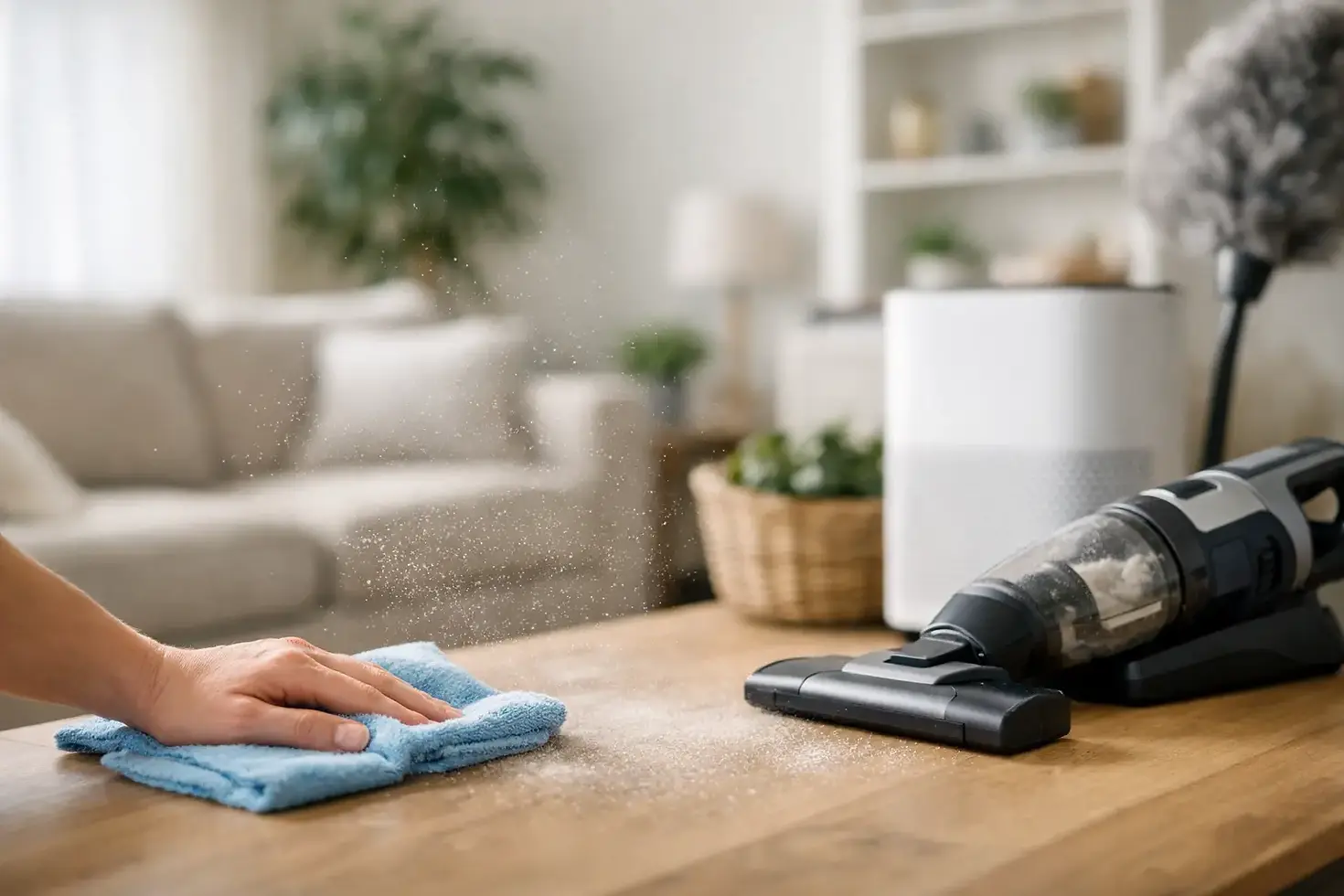
A slightly damp microfiber cloth is a more dependable choice for most hard surfaces. Microfiber catches and holds fine particles instead of simply moving them around. Fold the cloth into sections, wipe in one direction, and switch to a clean section as it becomes soiled. This is particularly helpful on shelves, nightstands, television stands, window sills, picture frames, and baseboards.
Work from high to low. Begin with ceiling fans, upper shelves, light fixtures, and the tops of cabinets before moving to furniture and floors. If you vacuum first and dust afterward, the dust you dislodge from higher surfaces can settle on a freshly cleaned floor.
Be gentle around electronics. A dry microfiber cloth is generally best for screens and sensitive equipment, while a soft brush attachment can remove dust from vents, keyboards, and hard-to-reach edges. Avoid spraying cleaners directly onto electronics.
Vacuum More Than the Centre of the Floor
Vacuuming is one of the most effective ways to reduce dust, provided the vacuum captures fine particles rather than releasing them back into the room. A vacuum with a sealed system and a HEPA filter is especially useful for homes with pets, allergies, carpeting, or high foot traffic.
The centre of a carpet is only part of the job. Dust and debris collect along baseboards, beneath beds, under sofas, around furniture legs, and in the seams of upholstered seating. Use the crevice tool and upholstery attachment regularly, especially in bedrooms and living rooms where fabrics hold onto fibres and dander.
For hard floors, vacuum before mopping. Sweeping with a traditional broom can stir light dust into the air, while vacuuming removes more of it from the floor and edges. Follow with a clean damp mop to lift the remaining fine residue.
How often you need to vacuum depends on your household. A home with pets, children, carpets, or frequent visitors may need high-traffic areas vacuumed two or three times a week. In a quieter condo with hard flooring, once weekly may be enough, with attention to corners and under furniture during a more thorough clean.
Improve Air Filtration and Vent Care
Your heating and cooling system can either help manage dust or keep redistributing it. Check your furnace filter regularly and replace it according to the manufacturer’s recommendation. In many GTA homes, this is every one to three months, though pets, renovations, and seasonal use can mean a filter needs changing sooner.
A higher-efficiency furnace filter can capture smaller particles, but it must be compatible with your HVAC system. Choosing the highest rating without checking system requirements can restrict airflow. When in doubt, consult your HVAC provider rather than guessing.
Portable air purifiers with HEPA filtration can also make a noticeable difference in bedrooms, home offices, and other rooms where people spend long periods. They are not a replacement for cleaning, but they can reduce the airborne particles that would otherwise settle on surfaces.
Do not overlook vents and return air grilles. Wipe them regularly, and watch for visible dust buildup around the openings. If dust returns quickly after filter changes and routine cleaning, or if your home has recently undergone renovations, professional duct assessment may be worthwhile.
Reduce Dust Held in Fabrics
Soft furnishings are comfortable, but they are also natural dust collectors. Bedding, curtains, area rugs, cushions, throws, and upholstered furniture trap fibres and particles that can be released whenever they are moved.
Wash sheets and pillowcases weekly in the warmest water recommended for the fabric. Wash duvet covers, blankets, mattress protectors, and washable throws on a regular rotation. Vacuum mattresses with an upholstery attachment when changing bedding, paying attention to seams and edges.
Curtains should be vacuumed with a soft brush attachment or washed according to their care label. Blinds need regular attention too, as each slat provides a small horizontal surface for dust to settle. A microfiber cloth or blind-cleaning tool will be more effective than a quick pass with a dry duster.
If dust is a persistent concern, consider the trade-off between style and maintenance. Heavy drapery, multiple decorative cushions, thick rugs, and open shelving can make a room feel warm and layered, but they require more frequent cleaning. You do not need to remove every textile from your home. Choosing washable, easy-care fabrics simply makes a consistent routine more realistic.
Keep Outdoor Dust Near the Door
A significant amount of household dust starts outdoors. Shoes bring in soil, road grit, pollen, and moisture, especially during wet GTA springs and slushy winters. Creating a simple entryway routine can reduce what reaches the rest of the home.
Use sturdy doormats both outside and inside the main entrance, and clean them regularly rather than allowing them to become dust reservoirs. A shoe-free policy indoors is one of the most practical changes for busy households. If guests prefer to keep shoes on, designate an easy-to-clean entry area and vacuum or mop it often.
Keep coats, backpacks, sports equipment, and pet supplies organized near the entrance where possible. Items that move constantly between outdoors and living areas can carry dirt and particles deeper into the home.
Manage Pet Hair, Clutter, and Humidity
Pets add warmth to a home, but they also add hair, dander, and outdoor debris. Regular grooming helps reduce shedding before it reaches furniture and floors. Wash pet bedding often, vacuum their favourite resting spots, and use washable covers on sofas or chairs they use frequently.
Clutter is another quiet contributor to a dusty home. Collections of décor, stacks of paper, open storage, and crowded shelves create many surfaces that are difficult to clean properly. You do not need a minimalist home, but keeping frequently used spaces clear makes regular dust removal faster and more thorough.
Humidity matters as well. Air that is extremely dry can allow particles to remain airborne more easily, while excessive humidity can encourage mould growth. Aim for a comfortable, moderate indoor humidity level and address condensation or moisture issues promptly. A humidifier may help during a dry winter, but it must be cleaned carefully to avoid adding mineral residue or microbes to the air.
Build a Routine That Prevents Buildup
The most effective dust-control plan is one your household can maintain. A brief weekly routine can cover visible surfaces, vacuuming, bedding changes, and entryway floors. Add a monthly deeper clean for baseboards, blinds, vents, ceiling fans, furniture interiors, and areas beneath larger pieces.
After a move, renovation, large gathering, or busy season, regular maintenance may not be enough. Fine dust can settle inside cupboards, closets, trim, and upholstery, where it is easy to miss. A detailed deep clean can restore the room-by-room standard needed to make ongoing cleaning manageable again.
For larger homes or demanding schedules, professional support can take care of the areas that are easiest to postpone. Arvand Group Cleaning provides detailed residential cleaning across the GTA, with a focus on the high and low surfaces, fabric areas, floors, and overlooked corners that make the difference between a home that merely looks clean and one that feels truly spotless and welcoming.
A lower-dust home is built through small, repeatable habits: catch particles at the door, remove them from floors and fabrics, filter the air thoughtfully, and clean from top to bottom. Once those habits are in place, your home stays more comfortable between cleans and requires far less last-minute effort before visitors arrive.


Comments