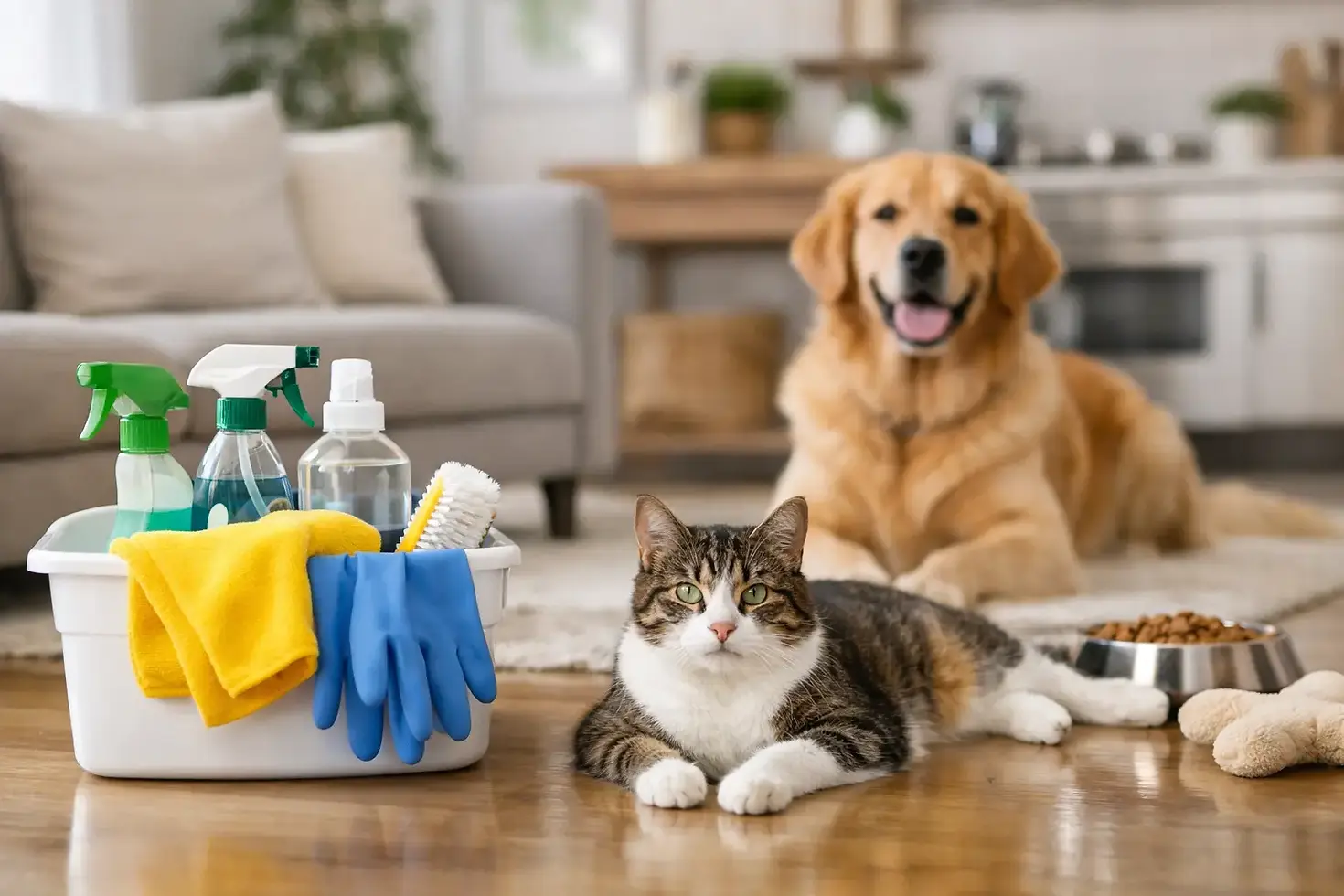
Pet Safe Cleaning for a Spotless GTA Home

A freshly cleaned home should feel reassuring, not like a place where you need to watch every paw and nose. Pet safe cleaning is about more than choosing a product labelled “natural.” It means managing residues, fumes, damp surfaces, cleaning tools, and storage so your dog, cat, bird, or small pet can enjoy a spotless, healthy, and welcoming home safely.
For busy households across North York, Toronto, Richmond Hill, Aurora, and the GTA, the right approach also needs to be practical. Pets shed, track in road salt and mud, have occasional accidents, and make their favourite spots known. A cleaning routine should keep up with real life without introducing unnecessary risks.
What Pet Safe Cleaning Really Means
A product is not automatically safe simply because it is plant-based, scented with essential oils, or marketed as green. Pets are smaller than people, spend more time close to floors and soft furnishings, and may lick a recently cleaned surface. Cats in particular can be sensitive to ingredients that people tolerate well. Birds and small animals may be affected by airborne sprays and strong odours more quickly than larger pets.
The goal is to clean effectively while reducing the chance of exposure. That usually means selecting products made for households with pets, following the dilution and contact-time directions exactly, rinsing surfaces when the label calls for it, and allowing areas to dry completely before pets return.
Good ventilation matters as much as the product itself. Open windows when weather permits, run the bathroom fan, and avoid spraying close to a pet’s bed, food bowl, litter box, cage, aquarium, or favourite blanket. If a product creates strong fumes, move pets to another well-ventilated area until the space is dry and odour-free.
Ingredients and Habits Worth Avoiding
The most dependable rule is simple: never assume that a stronger smell means a cleaner home. Fragrance can linger in carpets, upholstery, and enclosed rooms, while concentrated products can leave residue when they are overused.
Read labels before using any cleaner on floors, counters, glass, appliances, or fabrics. Pay close attention to hazard warnings and directions related to pets, children, ventilation, and rinsing. Keep original containers so instructions remain available, and never transfer cleaners into drink bottles or unmarked spray bottles.
Some common mistakes create more risk than the cleaning task requires:
Mixing cleaning products, especially bleach with ammonia, acids, or other disinfectants. This can create dangerous fumes.
Using highly fragranced sprays or essential-oil products around cats, birds, and small enclosed-pet habitats.
Leaving mop water, open buckets, cloths, or used disposable wipes where pets can drink from or chew them.
Applying concentrated cleaners directly to a surface instead of diluting them according to the label.
Letting a pet walk over a freshly treated floor before it has been rinsed or fully dried.
If you are unsure about a specific product, check its manufacturer guidance and ask your veterinarian about concerns for your pet’s species, age, health, and habits. A puppy that chews everything and a senior cat that avoids wet floors do not need exactly the same cleaning plan.
A Safer Room-by-Room Routine
Floors and entryways
Floors deserve the most attention because pets lie on them, walk across them, and may lick their paws afterward. Start with dry soil removal. Vacuuming or sweeping hair, grit, and road debris regularly reduces the need for aggressive wet cleaning later. In winter, entryway cleaning is especially useful in GTA homes, where slush and salt can be carried indoors.
For hard floors, use the appropriate cleaner for the material and avoid soaking wood, laminate, or grout. A properly diluted, low-residue solution and a clean mop are generally better than repeated heavy applications. Rinse if directed, then keep pets off the area until it is dry. Place washable mats at entrances to reduce what reaches the rest of the home.
Carpets need a balanced approach. Frequent vacuuming removes dander and hair, while prompt treatment of spills or accidents helps prevent odours from settling in. Before using a stain treatment, test it in a hidden area and follow the label. Avoid relying on perfume to cover an odour. The source of the stain needs to be removed, not masked.
Kitchens and feeding areas
Kitchen cleanliness protects everyone in the household. Wipe counters before preparing food, clean pet bowls with hot water and a pet-appropriate dishwashing product, and rinse thoroughly. Food and water bowls should not be cleaned with harsh residue-producing products or placed near recently sprayed surfaces.
Pet food crumbs can attract insects, while moisture around bowls can create unpleasant odours. A washable mat under bowls makes daily clean-up easier. Store cleaning products in a closed cupboard or high cabinet, ideally with a child-resistant latch if a curious pet can access the area.
Bathrooms, litter areas, and accident clean-up
Bathrooms and litter areas often call for disinfecting, but this is where product directions are particularly important. Use a cleaner appropriate for the surface, ventilate the room, and keep pets out until the area is dry. Never leave toilet bowl cleaner accessible, and keep the toilet lid closed if your pet tends to drink from the bowl.
For urine, vomit, or other accidents, act promptly. Blot first rather than rubbing the material deeper into carpet or upholstery. Then use a suitable pet-stain cleaner as directed and allow it to dry fully. For a recurring accident in the same spot, a deeper clean may be necessary because odour can remain below the surface even when the area looks clean.
Wash reusable cloths, mop heads, and pet bedding regularly. Separate heavily soiled cleaning cloths from kitchen towels, and avoid using the same cloth for food-preparation surfaces and pet messes.
Upholstery, bedding, and favourite pet spaces
Sofas, rugs, pet beds, and blankets hold hair, dander, dust, and outdoor debris. Vacuum upholstery with the right attachment, including beneath cushions and along edges where hair collects. Wash pet bedding according to its care label and make sure it is fully dry before returning it to use.
A washable throw on a pet’s preferred sofa spot can make maintenance much easier, especially during shedding season. It is not a substitute for regular upholstery cleaning, but it can reduce wear and help keep shared spaces presentable between deeper cleans.
When Eco-Friendly Still Needs Care
Eco-friendly products can be a thoughtful choice for a pet household, particularly when they are low-odour and designed to leave minimal residue. However, eco-friendly does not mean harmless in every situation. A concentrated botanical cleaner still needs proper dilution, and a product with essential oils still needs caution around sensitive animals.
Choose cleaners based on the task, surface, and household needs. A gentle everyday floor cleaner may be suitable for routine maintenance, while post-renovation dust, mould concerns, or a severe odour issue may require a more specialized method. In those cases, the safest approach is often professional assessment and careful product selection rather than repeated DIY applications.
Professional Cleaning in a Pet Household
Professional cleaning can make a meaningful difference when pet hair, embedded carpet soil, move-related cleaning, renovation dust, or a large-home deep clean has become difficult to manage. The key is clear communication before the appointment. Let the cleaning team know what pets live in the home, whether they are nervous around new people, which rooms or products need special consideration, and where pets will be during service.
A dependable cleaning team will work from a defined scope, use appropriate equipment, and take care around pet areas. Pets should be secured in a calm room, crate, or safe off-site location while cleaners are working. This reduces stress for the animal and prevents accidental escapes through an open door.
At Arvand Group Cleaning, detailed residential cleaning is planned around the realities of occupied homes. For pet owners, that means discussing priorities such as fur removal, floor care, upholstery attention, litter-area cleaning, and low-odour product preferences before the work begins. A personalized plan is especially helpful for deep cleaning, move-in cleaning, and post-renovation service, when the cleaning needs are more intensive.
Keep Safety Simple and Consistent
The best pet-safe routine is not built around a cabinet full of products. It is built around consistent habits: remove loose dirt often, use the right cleaner sparingly, rinse and dry surfaces as required, ventilate well, and store every product securely. These steps protect pets while making daily cleaning more manageable.
A clean home should give your household room to relax. With thoughtful product choices and careful attention to the spaces pets use most, you can maintain the polished, comfortable environment your family enjoys without asking your animals to stay out of it.


Comments